Origin and Basic Function of the Fibula

The fibula ranks among the oldest—and simultaneously most enduring—clothing fasteners in human history. In antiquity, it was far more than merely a practical device for fastening garments; it
also fulfilled aesthetic, social, and, in some instances, even symbolic functions. Particularly in ancient Greece and the Roman Empire, the fibula evolved into a central element of clothing
culture. Today, its various forms, materials, and methods of wear offer us valuable insights into the social structures, fashion trends, and cultural identities of these two great
civilizations.
Origins and Basic Function of the Fibula
Fundamentally, a fibula is a garment fastener that operates by means of a pin, a coiled spring, and a bow. Its purpose was to hold fabrics together long before buttons or zippers were invented.
Such a fastener was indispensable, particularly for ancient attire—which frequently consisted of large, unshaped lengths of fabric.
The earliest fibulae emerged as early as the Bronze Age, evolving from simple safety pins. Over the centuries, however, increasingly complex forms developed. During the Greek and Roman eras, the
fibula attained a high degree of technical and artistic sophistication. It served not only a functional purpose but also acted as a piece of jewelry capable of conveying status and
identity.
The Fibula in Ancient Greece
In ancient Greece, the cut of clothing differed fundamentally from that of later eras. Rather than tailored garments, men and women wore what are known as "draperies": fabrics were artfully
draped around the body and secured with fibulae. Typical garments included the chiton, the peplos, and the himation.
The fibula played a central role in this regard. The peplos—a traditional garment worn by women—was, in particular, frequently fastened at the shoulders using fibulae. This method of fastening
was not merely functional; it also determined the overall silhouette of the entire garment. Without a fibula, the peplos would simply have been unwearable.
In Greece, fibulae were frequently crafted from bronze, and later from silver or even gold. Their shapes were often relatively simple, though regional variations did exist. Particularly during
the Archaic period, so-called "bow fibulae"—characterized by a simple, curved form—were widespread. Later, animal and geometric motifs were introduced, becoming increasingly decorative over
time.
The social significance of the fibula within the Greek world is also of interest. While ordinary citizens typically wore simple bronze fibulae, wealthy individuals might possess elaborately
decorated examples fashioned from precious metals. These were frequently utilized in religious contexts or placed in tombs as grave goods. Archaeological finds from sites such as Athens
demonstrate that fibulae also played a role in ritualistic practices.
The fibula was equally indispensable in everyday life. It served as a practical tool—particularly on the clothing of travelers, soldiers, and artisans—for fastening cloaks or mantles. At the same
time, it could offer clues regarding the wearer's origin and social status.
Transition and Evolution during the Hellenistic Period
With the expansion of Hellenistic culture following the conquests of Alexander the Great, the forms of fibulae also underwent a transformation. The cultural exchange between Greece, Asia Minor,
and the Near East resulted in a greater diversity of designs and materials.
During this era, fibulae became increasingly complex. They featured intricate ornamentation, inlay work, and new technical improvements in their spring mechanisms. Concurrently, they evolved into
significant objects of prestige; particularly within courtly circles, richly adorned fibulae served as a key status symbol.
The Fibula in the Roman Empire
In the Roman Empire, the fibula assumed an even greater significance than it had previously held in Greece. Roman attire was highly standardized, consisting of clearly defined garments such as
the toga, the tunic, and the paludamentum.
While the toga itself was typically not fastened with a fibula, this brooch played a central role in securing cloaks, mantles, and military garments. Soldiers, in particular, utilized fibulae to
fasten their heavy cloaks—known as the *sagum*.
The Roman fibula—often referred to simply as a *fibula*—evolved into numerous variants. Particularly well-known are the cross-bow fibulae, which were widespread throughout the entire Empire. They
were characterized by a sturdy construction and a distinctive shape that was often richly ornamented.
In Roman society, the fibula was not merely a clothing accessory but also a political and cultural symbol. Specific forms could indicate military affiliation, rank, or regional origin. Within the
military, especially, the fibula was an integral part of the uniform and could even be awarded as a decoration.
Archaeological finds from Rome demonstrate that fibulae were prevalent across all social strata. While common soldiers or ordinary citizens tended to wear simple bronze variants, senators and
wealthy citizens favored elaborately crafted examples made of silver or gold.
The Wearing of Fibulae in Daily Roman Life
The manner in which fibulae were worn depended heavily on one's clothing and social role. Men frequently wore them on the right shoulder to fasten a cloak draped over the left shoulder. This
asymmetrical style of wearing was practical, as it left the right arm unencumbered.
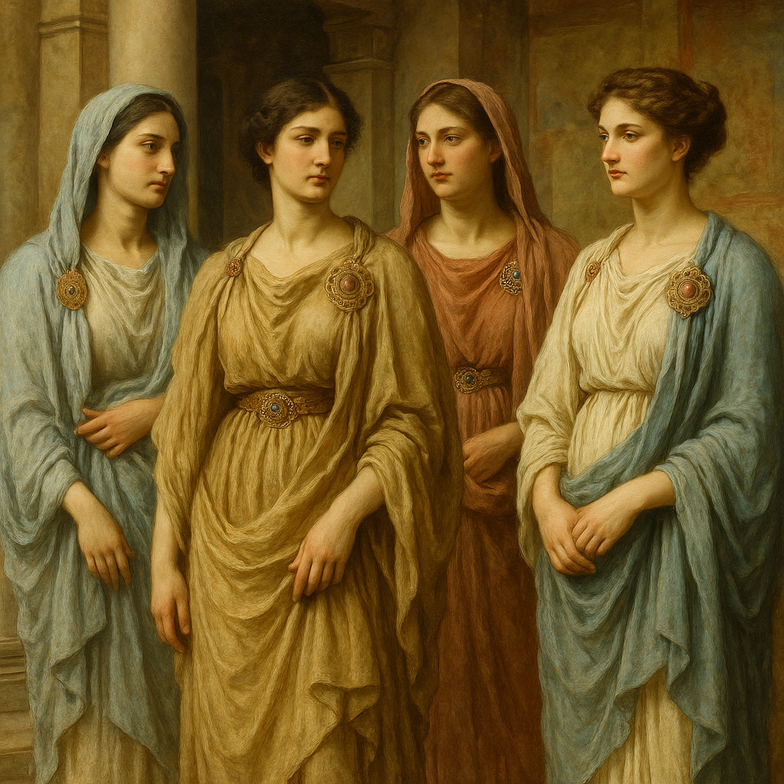
For women, conversely, fibulae were often used in pairs—particularly to fasten garments at both shoulders. This practice was especially common with tunic-like robes. In some instances, multiple
fibulae were worn simultaneously to create decorative patterns or to secure multiple layers of fabric.
The placement of a fibula could also be subject to fashion trends. During certain eras, it was popular to wear fibulae visibly and prominently, whereas at other times, they were employed in a
more functional and understated manner.
Materials and Manufacturing Techniques
The production of fibulae was a sophisticated craft. Bronze was the most commonly used material, as it was relatively easy to work with yet durable. In wealthier circles, silver, gold, and
occasionally iron were also utilized.
Production typically involved casting in molds or forging. Subsequently, the fibulae were often polished and embellished with engravings, enamel, or gemstones. Particularly within the Roman
Empire, this craftsmanship attained a very high level of sophistication.
The technical evolution of the spring mechanism was crucial to the functionality of the fibula. A well-engineered spiral spring ensured that the pin locked securely into place and that the clasp
remained stable. Conversely, poor workmanship could result in the fibula coming undone easily—a nuisance that proved highly disruptive in daily life.
Symbolism and Cultural Significance
Fibulae were not merely practical objects but also bearers of cultural significance. They could symbolize power, wealth, and affiliation. In some instances, they were bestowed as gifts or badges
of honor.
In the military context of the Roman Empire, fibulae were an integral part of a soldier's identity; specific types could indicate membership in a particular legion or a specific rank. In civilian
contexts, conversely, they often served as jewelry that expressed personal tastes and social status.
Fibulae also played a role in the religious sphere. In Greece, they were occasionally deposited in temples as votive offerings. They could be sacrificed to the gods to solicit protection or good
fortune.
Archaeological Significance
For modern archaeology, fibulae are of great importance because they can be dated with relative precision. Due to their evolving forms, they often serve as so-called *leitfunde* (index finds).
This means that archaeologists can use a fibula to determine the chronological period of an archaeological site with considerable accuracy.
Particularly in burial contexts, fibulae provide crucial clues regarding the gender, social status, and cultural affiliation of the deceased. Furthermore, the distinctions between Greek and Roman
fibulae help scholars trace cultural influences and trade networks.