European Fibulae: From the Bronze Age to the Hallstatt period
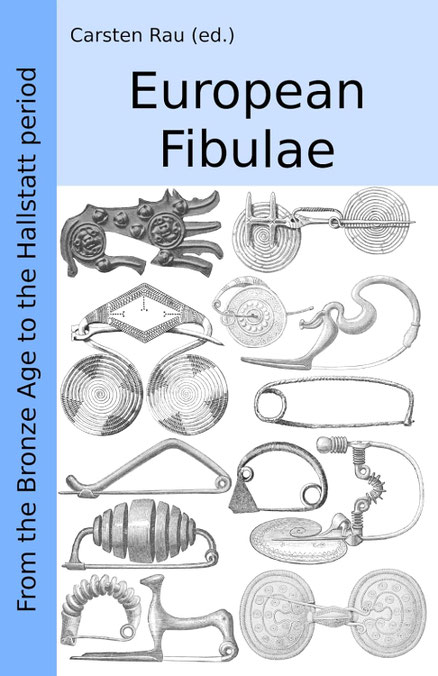
European Fibulae: From the Bronze Age to the Hallstatt period
By Carsten Rau
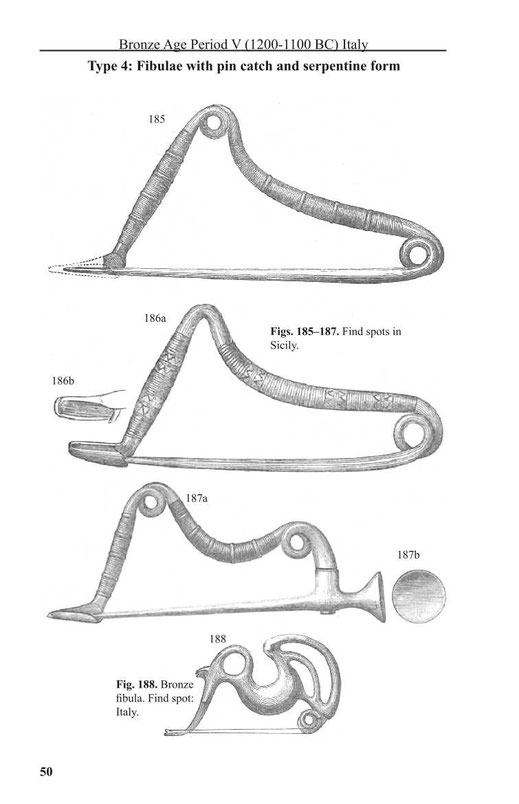
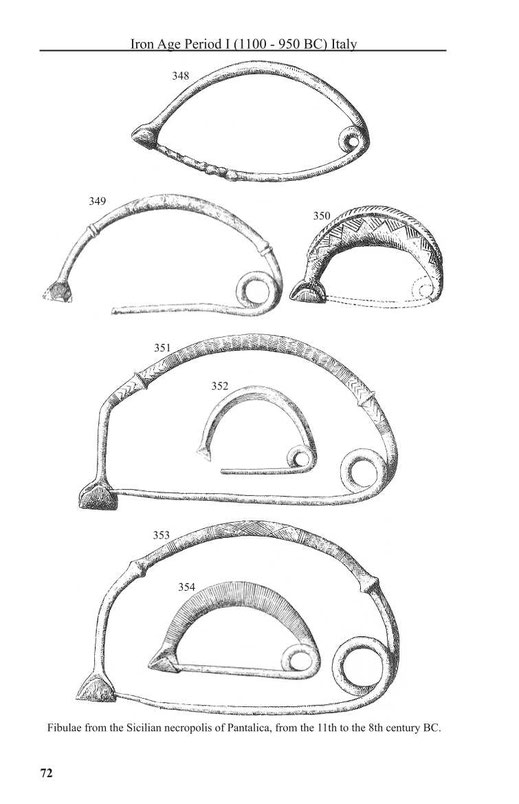
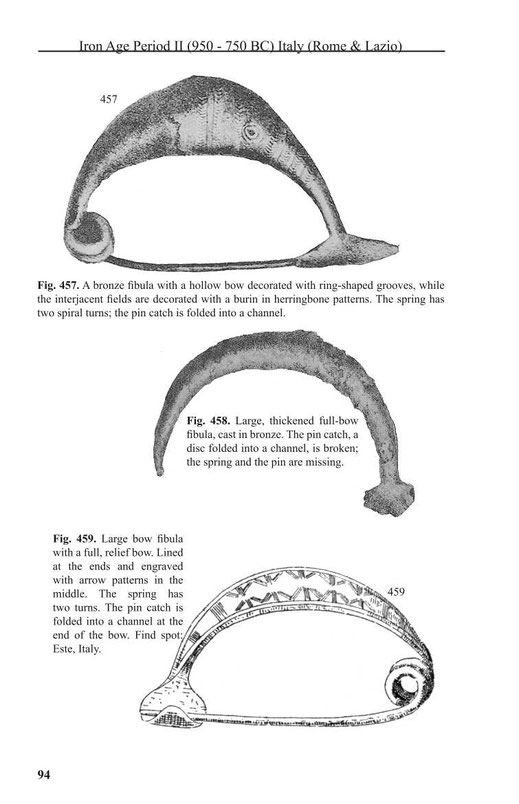
The fibula, originally made from a bent pin, not only held garments together but also served as a status symbol for the wearer from the outset. It developed into a wide variety of forms, depending on culture, region, and individual taste. European brooches evolved into important clothing accessories from their emergence in the Bronze Age through to their decline in the Middle Ages, varying greatly from region to region while exhibiting distinctive artistic styles.
Brooches are considered among the most important diagnostic finds in archaeological excavations, alongside coins, and are also highly sought-after collectibles internationally.
This first volume provides a comprehensive insight into the origins and development of brooches, from the simple forms of the Late Bronze Age to the most elegant jewelry pieces of the Hallstatt
period. Years of work have gone into compiling contributions and articles from approximately 100 international researchers, historians, and museum directors from the 19th and 20th centuries,
including Rudolf Virchow, Oscar Montelius, and Ludwig Lindenschmit. More than 2,300 illustrations showcase the diversity of European bronze craftsmen and jewelry makers in the
pre-Christian centuries.
Beginning with Italian brooches from the Bronze and Iron Ages, the work also presents brooches from Swedish, Hungarian, and German-speaking regions. The magnificent brooches from Greece and the
Balkans conclude the volume. Historical and modern terminology, brooch classifications, and corresponding dates complete this unique reference work.
ASIN : B0GY13CDS9
Publisher: Independently published
Publication date: April 20, 2026
Language: English
Print length: 511 pages
2.373 pictures
ISBN-13: 979-8258221179
Item weight: 635 g
Dimensions: 12.85 x 2.95 x 19.84 cm
The book can be purchased here:
TABLE OF CONTENTS
THE ITALIC FIBULAE OF THE THIRD BRONZE AGE
- Peschiera fibulae with spiral disc
- Peschiera fibulae with pin catch
- Peschiera fibulae later form
- Peschiera fibulae with broad-oval body
- Bow fibulae
THE ITALIC FIBULAE OF THE IV BRONZE AGE
- Type 1: Fibulae with spiral disc and simple bow
- Fibulae with rare bow shape
- Type 2: Fibulae with spiral disc and serpentine form
- Type 3: Fibulae with pin catch and simple bow
- Type 4: Fibulae with pin catch and serpentine form
THE ITALIC FIBULAE OF THE V BRONZE AGE
- Type 1: Fibulae with spiral disc and one-sided pin
- Large, smooth pin catch plate or with traces of attachments
- Type 2: Fibulae with spiral disc and serpentine form
- Type 3: Fibulae with pin catch and simple bow
- Type 4: Fibulae with pin catch and serpentine form
THE ITALIC FIBULAE OF THE FIRST IRON AGE
- Type 1: Fibulae with spiral disc and simple bow
- Type 2: Fibulae with spiral disc and serpentine form
- Type 3: Fibulae with pin catch and simple bow
- Type 4: Fibulae with pin catch and serpentine form
THE ITALIC FIBULAE OF THE SECOND IRON AGE
- Type 3: Fibulae with pin catch and simple bow
- Bow fibulae (made of bronze) from Rome and Lazio
- Special form: Zoomorphic fibulae
- Type 2 and type 4: Fibulae with serpentine form, pin catch and plate
THE ITALIC FIBULAE OF THE THIRD IRON AGE
- Type 4: Fibulae with pin catch and serpentine form
- Fibulae in special form
- Spiral- and disc fibulae (Spectacle Fibulae)
THE ITALIC FIBULAE OF THE FOURTH IRON AGE
- Certosa fibulae
- Crossbow Certosa fibulae
- Type 4: Fibulae with pin catch and serpentine form
THE SWEDISH FIBULAE OF THE BRONZE AGE
- Plate brooches
- Site
- Plate brooches with ribbon figures and concentric circles
THE HUNGARIAN FIBULAE OF THE BRONZE AGE
THE NORTHERN, CENTRAL AND EASTERN EUROPEAN FIBULAE
1st group: Nordic–North German bronze fibulae
- Nordic proto-fibula
- Spiral plate fibulae with piston form pin head
- Spiral plate fibulae with cross bar pin head
- Special spiral plate fibulae
- Other spiral plate fibulae
- Fibulae with hanging plates (Hanoverian brooch)
- Unusual fibulae from West Prussia
- Spiral plate brooch with widened bow
- Nordic bow fibulae
- Flat plate brooches
- Arched plate brooches
- Fibulae with wavy bow
2nd group: South German–Austrian fibulae
- Single-part wire fibula
- The Peschiera fibulae (rest of Europe)
- So-called harp fibulae
- ‘Spectacle’ fibula
- Double ‘Spectacle’ fibula
- Plate brooches
- Bow fibulae
- Variants Group I (short pin catch)
- Variants Group II (long pin catch)
- Two- and three-button fibulae
- Certosa fibulae
- Oldest crossbow fibulae
- Crossbow fibulae with zoomorphic and human heads
- Fibula with decorated end
- Knee brooches
- Drum-, bowl-shaped and button fibulae
- Serpentine fibulae with pin catch
- Drago fibulae
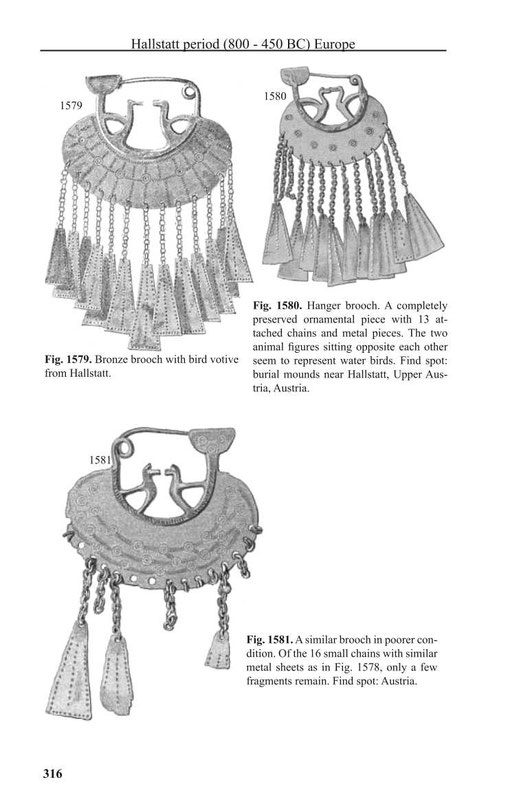
- Special form: hanger brooches
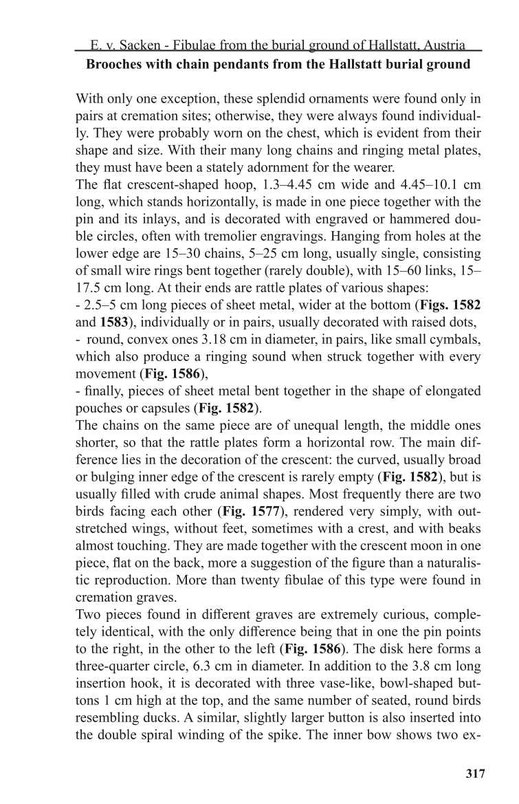
- Brooches with chain pendants from the Hallstatt burial ground
- Brooches and rattle jewelry
- How brooches were attached to garments
- Plate brooches from the burial ground of Hallstatt
- Special form: zoomorphic brooches
- Zoomorphic brooches from the burial ground of Hallstatt
- Lower Elbian special form
- Hook brooches from the Hallstatt period
THE BOW FIBULAE FROM KOBAN, CAUCASUS
THE GREEK FIBULAE
- Greek fibulae
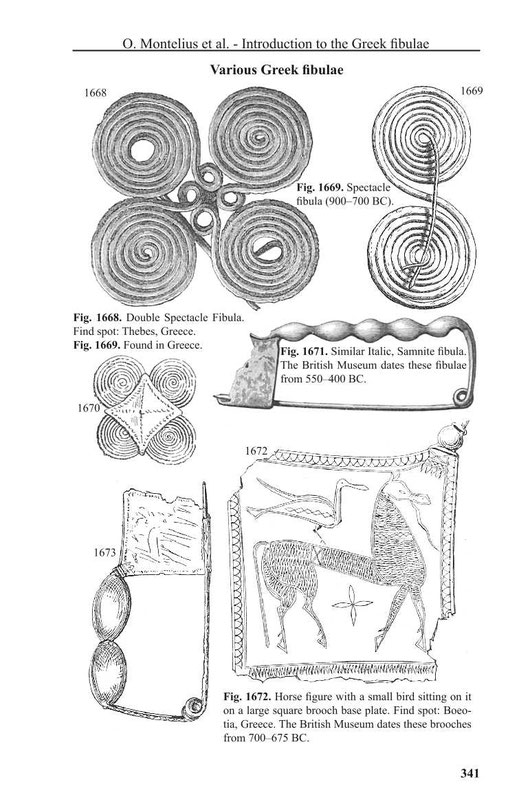
- Various Greek fibulae
- Fibulae from the sanctuary of Aphaia (Aegina)
- Greek swastika brooches
- Description of the Greek fibulae from the Boeotian graves
- Fibulae from the sanctuary of Heraion in Argos, Peloponnese
- Fibulae from Gordion in Phrygia (Turkey)
- Fibulae from Troy (Hisarlık), Turkey
- Fibulae from Olympia, Greece
- Greek fibulae from Asia Minor
ANCIENT NEAR EASTERN FIBULAE
- The fibulae of Cyprus (Ohnefalsch-Richter)
- The fibulae of Cyprus (Murray)
- Fibulae from Thera
- Fibulae from Delphi
- The fibulae of Odysseus, Helikes and Calyces
FIBULAE FROM SLOVENIA
- Various knotted fibulae
- Single and double loop bow brooches
- Slovenian boat-shaped fibulae
- Bow brooches of various types
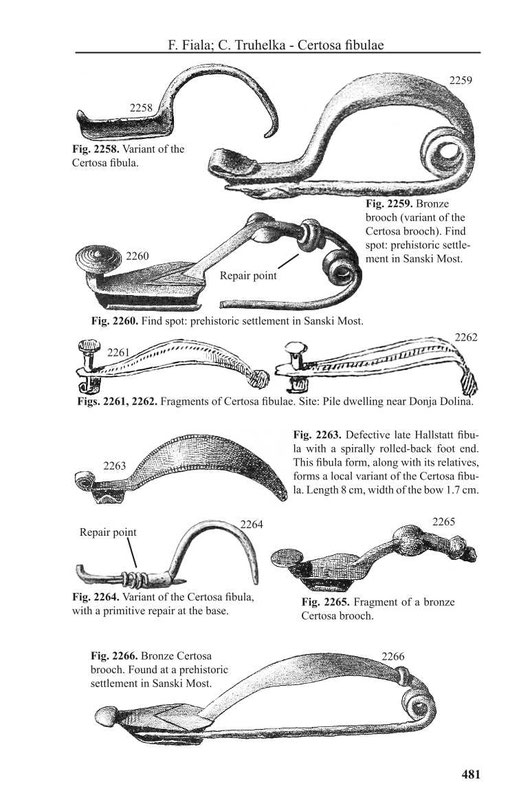
- Certosa fibulae
- Crossbow Certosa fibulae
- Eastern Alpine zoomorphic head brooches
- Fibula with serpentine form and Drago fibula
- Spiral brooches
FIBULAE FROM BOSNIA AND HERZEGOVINA
- Fibulae types of local industry from Glasinac
- Fibulae from the pile dwelling in the Sava valley near D. Dolina
- Bow fibulae from Gorica
- Bow fibulae from Bosnia and Herzegovina
- Fibulae from the Rakitno Plateau, Herzegovina
- Bow fibulae with attached pin (special shape)
- Greek hinged-bow fibulae on the Balkan Peninsula
- Certosa fibulae
- Certosa fibulae from the necropolis of Jezerine in Pritoka
- Further Certosa fibulae of the Late Hallstatt period
- Crossbow Certosa fibulae
- Two-roll crossbow Certosa fibulae
- Double spiral brooches with amber pearl decoration
- Special fibulae
LATE HALLSTATT ITALIC FIBULA FORMS
- Fibula with serpentine form
- Two- and three-button fibulae
- Older plate brooches
- Spiral fibulae
Author and image source index